

|
The
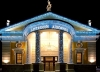
Conservatoire was founded by the conductor Anton Rubinstein in 1862.
Originally, it was in a wing of Demidov's mansion in the Moika
Embankment, then it moved to other
places several times. On November 12,
1896, the opening ceremony of the
building specially reconstructed for
the Conservatoire took place. This
building is in Theater Square.
Reconstruction of this building
was supervised by engineer-architect
Vladimir Nicolas. It became a
building very unusual in that epoch:
there were rooms for lectures and
classes as well as a theater.
The architectural features of the
Conservatoire resemble those of the
Italian Renaissance and the French
architecture of the 18-th century.
The first year after opening the
Conservatoire, 179 students were
enrolled. Later, 200 students would
be enrolled every year. Professors of
the Conservatoire were Anton
Rubinstein, Fyodor Leshetitsky, Anton
Gerke (piano), Genrik Venyavsky,
Leopold Auer (violin), Karl Schubert,
Karl Davydov (cello), Cesare Chairdi
(flute), Walter Zabel (harp),
Henrietta Nissen-Saloman, Camillo
Everardi (vocal classes), Nikolai
Zaremba (theory of composing), etc.
Among the famous graduates of the
Conservatoire were the pianist Anna
Yesipova, the cellist Alexander
Verzhbilovich, the singer Elizaveta
Lavrovskaya, the bass Fyodor
Stravinsky and many others.
The first graduate of the
Conservatoire to become a composer
was the great Russian composer Pyotr
Tchaikovsky. His name is the first in
the list of names on the Memorial
Board at the entrance to the Smaller
Hall (the Quartet Hall), and there is
his statue by the sculptor Vladimir
Beklemishev in the Opera House foyer.
In 1988, the theater was named the
Musical Theater of Opera and ballet
at the Rimsky-Korsakov Conservatoire
of St. Petersburg. At present, the
Chief Conductor of the theater is
Alexander Sladkovsky and the Chief
Ballet-Master is Professor Nikita
Dolgushin, People's Dancer of Russia.
A real gem of the Conservatoire is
its auditorium (the Glazunov Concert
Hall). Since the day of the first
concert held here (on December 12,
1896), the original interior and the
acoustics of the auditorium have been
preserved. From August 2000 to May
2001, there was thorough restoration
of this auditorium.
The
repertoire of the theater includes
the best works of Russian and
international classics. The company
of the theater continues the
traditions of the Russian opera and
the Russian ballet.
Assembly.M Tour Company |